Rust Console Base Building Guide for Beginners
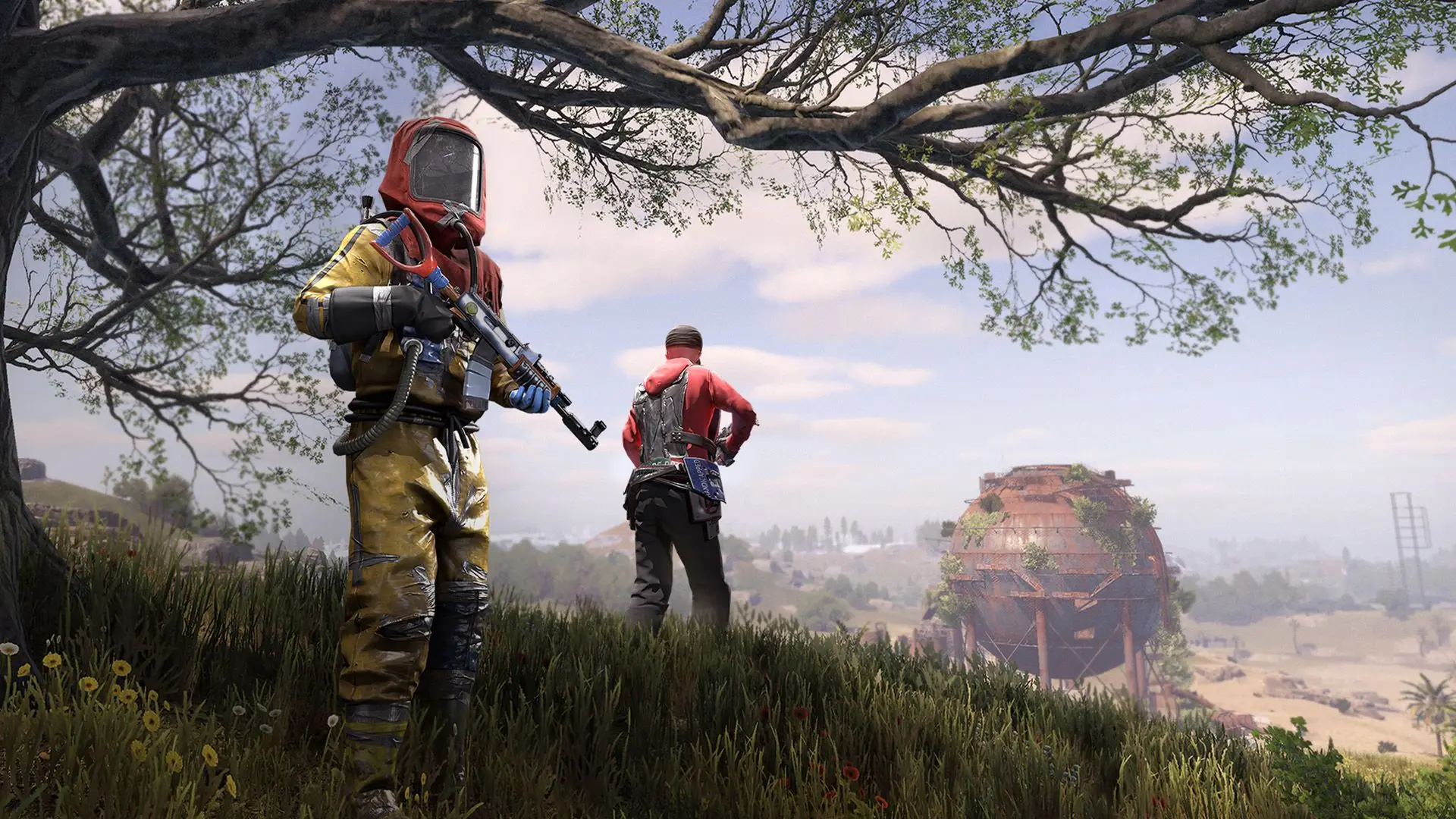
In Rust Console Edition, a poorly built base isn’t just ugly—it’s often a surefire recipe for frustration. If you build too openly, too large, or without any plan at all, it won’t be long before someone else claims your loot as their own. Our Rust Console Base Building Guide shows you how to build tactically smart and secure bases, even as a beginner.
Your base isn’t just decoration—it’s about survival
We’re all familiar with base building from many survival games, and in many of them, the base also serves the purpose of simply looking pretty—but in Rust Console Edition, it’s a bit different.
Of course, you can build your Rust base according to your own wishes and ideas, but it shouldn’t just be some random building on top of a hill where you wait for the perfect moment at sunset. Your base is your shelter, your camp, your respawn point, and, ideally, the reason you don’t have to start from scratch after a lost battle.
Especially in the beginning, many Rust Console beginners make the same mistake. They gather a bit of wood and stone, quickly put something up, and are happy with their first four walls. However, that is THE invitation for a free raid for other Rust players. Creative building is rewarded, but clean, tactical, smart, and careful building in Rust is rewarded even more.
Near the road is a good spot, right? NO!
Before you even start thinking about walls, roofs, or doors, you first have to ask the most important question of all: Where should I even build my base?
Because in Rust Console, your building site is often the difference between a “relaxed start” and “it was cool to have the base for ten minutes.” If you build right next to a road, too close to a monument, or prominently in an otherwise completely open area, you’ll become one thing: a landmark. And in Rust Console, landmarks aren’t admired—they’re destroyed.
Especially as a beginner, it’s much smarter to start by building something a bit more low-key and inconspicuous. Your base doesn’t have to be at the end of the world, but it shouldn’t be right in the middle of it either. Just make sure you can easily access resources, but don’t live as if a giant neon sign saying “Free Loot Here!” wouldn’t make a difference.
Starting small isn’t a mistake
Of course, this might not sound incredibly exciting at first, but a small base is often exactly what you need for a good start in Rust Console. You don’t have to live out your fortress dreams right away—that comes later.
A compact starter base is quick to build, cheaper to maintain, and significantly easier to secure than an overly ambitious project that overwhelms you and might never get finished. New players lose that crucial early time at this point. If you try to do too much too soon in Rust, the game will show you that’s not the best approach.
No Tool Cupboard, No You
If you want to build in Rust Console Edition, the Tool Cupboard (or “TC” for short) is practically the heart of your base. The Rust Console Tool Cupboard prevents your base from decaying as long as the necessary resources for maintenance are stored inside. It also ensures that other players can’t continue building directly on or very close to your base. This makes it all the more important that the TC isn’t just placed anywhere, but is well-protected.
And just like the door to your base, you should also equip the Tool Cupboard with a lock or code. This ensures that not just anyone can gain unauthorized access and turn your base upside down. Not a nice-to-have. A must.
Doors Will Save Your Life – and Your Loot
Okay. The base is up. It looks pretty good from the outside—but what about the inside? If you’ve only focused on your base’s exterior appearance, it might cost you your life—and thus your loot.
Rust console base building isn’t just about throwing something together. How do you move around your base, and how easily can other players get into your Rust base? Doors are absolutely crucial here. Proper door placement plays a key role in determining how secure your base really is.
If someone breaks through your front door and can kill you right away—well, that’s basically like inviting them in. So it makes a lot of sense not to just put up four walls and slap a door in the middle. You need pathways and rooms that protect you and are equipped with doors, so that not just any player can stroll into your base and loot everything.
Twig is not a building material, it's a cry for help
One of the most classic beginner mistakes in Rust Console Edition is getting stuck on the early building stages for too long. You lay foundations, walls, and ceilings; everything’s up, and you think: nice, it’s done. Unfortunately, no.
If you don’t upgrade your Rust Console base in time, it’s basically already doomed to fail. The first phase, in particular, isn’t something you should sit back and relax about. The sooner you switch to more durable materials, the less attractive your base becomes to other players. Here’s the thing: Your base doesn’t have to be unraidable, but it should at least not be wide open to others.
Be sure to pay close attention to maintenance. The Cupboard tool shows you exactly what costs are incurred every 24 hours to keep your base from decaying. Larger and higher-quality bases require correspondingly more resources. So don’t keep expanding without a plan if you don’t have enough resources on hand.
A good base thrives on security and logic
When it comes to base building in Rust, one thing is important: build as securely as possible. But what's the point of the most secure base if you can't even find your way around it? Random crates are scattered everywhere with stuff you don't even remember where you got it from. The Cupboard tool is right next to the front door, welcoming visitors. And with every Rust console crafting process, you feel like you’re living in a maze.
Not like this. Yes, the base must be secure, but it’s just as important to keep things organized. No need for perfection, but you need to be able to quickly access everything you need. Weapons, healing items, building materials, resources, and your sleeping area shouldn’t feel like a side quest every time.
Base Building on Your Own Rust Console Server
Especially for new Rust players, base building is often the point where fun suddenly turns into stress. You actually want to learn how to place doors sensibly, arrange rooms cleverly, or build securely. Instead, you’re constantly under pressure from other players or lose building materials because chaos is never far away.
That’s exactly where having your own Rust Console Server becomes interesting. Not because you don’t want a challenge anymore, but because it gives you the space to learn things properly, test new builds with friends, and develop a feeling for sensible base structures.
Your base, your rules, your pace
A good (first) base in Rust Console Edition won’t take all the stress off your shoulders, but it will ensure you’re significantly less aimless. That’s exactly the difference between “I built something” and “I understand how Rust works.”
If you really want to try out Rust base building in a relaxed way with your friends, improve together, and do so without annoying server stress, then your own GPORTAL Rust Console Edition server is the next step. With us, you get even more control, better conditions, and the space to slowly turn an improvised shack into a real and safe home.
Recent articles:
Enshrouded 1.0: Embervale grows beyond its limits - Here's what we know so far!
October 5, 2026
Start Your Villager Trading Hall Now
October 2, 2026
What's in the upcoming Hytale Chapter 1 Update
October 1, 2026
No Mountain is too high: All about the Valheim Grappling Hook
September 28, 2026
Valheim Intricate Key: How to open Mörkhalla
September 23, 2026


